Can Your Employer Track Your Location? Why Sa
Can Your Employer Track Your Location Employee locat...

When it comes to the pharmaceutical industry in Bangladesh, few sectors showcase such remarkable growth and self-sufficiency. As we step into 2026, the Bangladesh pharma market continues to thrive, valued at over USD 3.5 billion and boasting a compound annual growth rate (CAGR) of 12–15%. For anyone searching for “Best pharmaceutical companies in Bangladesh” or “best pharma firms in Bangladesh,” this comprehensive guide is your go-to resource. We’ll integrate key insights on market leaders, weaving in essential terms like “Bangladesh generics market,” “pharma exports from Bangladesh,” and “pharmaceutical sector growth in Bangladesh” to provide a naturally optimized overview.
The story of pharmaceutical companies in Bangladesh begins post-independence, evolving from heavy import reliance to dominating 97% of the domestic market with affordable generics. Supportive policies, such as the 1982 National Drug Policy, have propelled local pharma firms to export highs, reaching USD 205 million in FY2023–24. Today, searches for “top pharma market share in Bangladesh” continue to rise as the industry employs over 115,000 skilled professionals and contributes significantly to GDP. This article not only ranks the top 20 pharmaceutical companies in Bangladesh but also delves into their histories, products, achievements, and future strategies, ensuring a semantically rich exploration of “Bangladesh drug manufacturing trends” and “investing in Bangladesh pharma.”
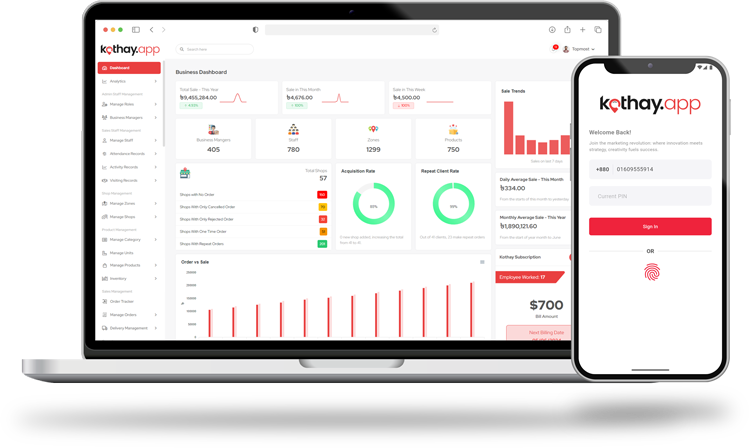
In this rapidly expanding and highly competitive environment, technology-driven operational efficiency has become a key differentiator. This is where Kothay.App can play a transformative role. As a real-time location tracking and field force management solution, Kothay.app helps pharmaceutical companies monitor medical representatives (MRs), optimize territory coverage, track visit performance, and analyze sales activities across regions. With features like live GPS tracking, route history, attendance monitoring, and performance analytics, pharma companies can significantly improve field productivity, reduce operational inefficiencies, and enhance data-driven decision-making. In an industry where timely doctor visits, territory planning, and sales execution directly impact revenue growth, integrating a smart sales tracking system like Kothay.app supports sustainable expansion and stronger market positioning within Bangladesh’s booming pharmaceutical sector.

The pharma industry in Bangladesh has transformed into a global contender, driven by innovation and regulatory agility. Key factors include TRIPS flexibilities for LDCs, which allow patent exemptions until recent graduations, enabling cost-effective production of generics. Searches for growth of the pharmaceutical sector in Bangladesh reveal a market that met 98% of local demand in 2025, with exports surging to markets like the US, EU, Africa, and Asia.
Statistics paint a vivid picture: The Bangladesh generics market grew 17.3% year-on-year in Q1 2025, fueled by investments in API (Active Pharmaceutical Ingredients) parks. Despite challenges like raw material imports (95% dependency), the sector’s resilience shines through, especially post-COVID, where firms ramped up vaccine and antiviral production. Integrating pharma exports in Bangladesh naturally, exports are projected to hit USD 213 million in FY2024-25, highlighting opportunities in Bangladesh pharma investment prospects.
Sustainability is another rising theme, with companies adopting green manufacturing to align with global standards. For those querying future trends in Bangladesh pharma, expect a shift toward biologics, digital health integration, and reduced import reliance by 2030.
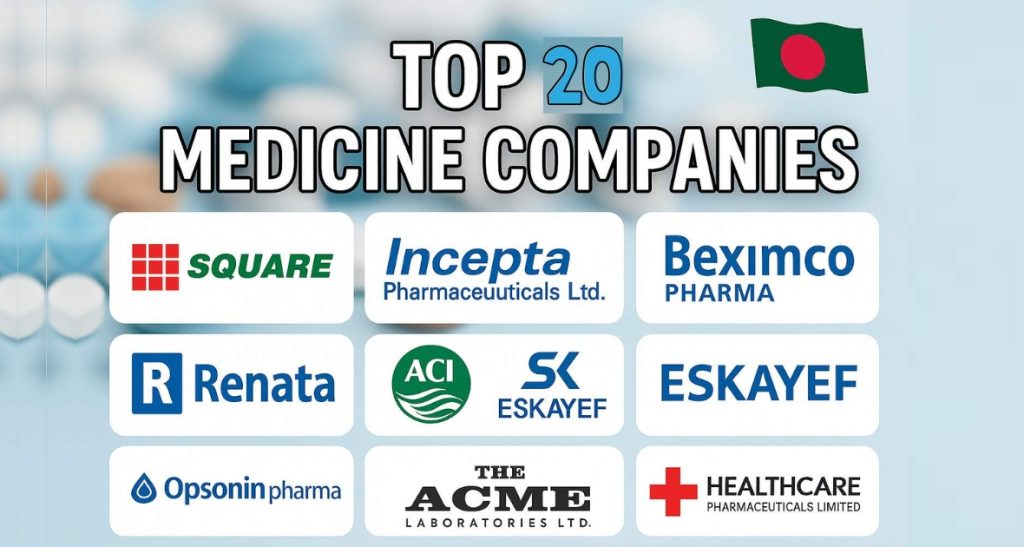
Based on Q1 2025 Moving Annual Total (MAT) data, updated for 2026 relevance, here’s the ranking of top pharmaceutical companies in Bangladesh 2026. This table incorporates the market share of pharma companies in Bangladesh, sales values, growth rates, and focus areas.
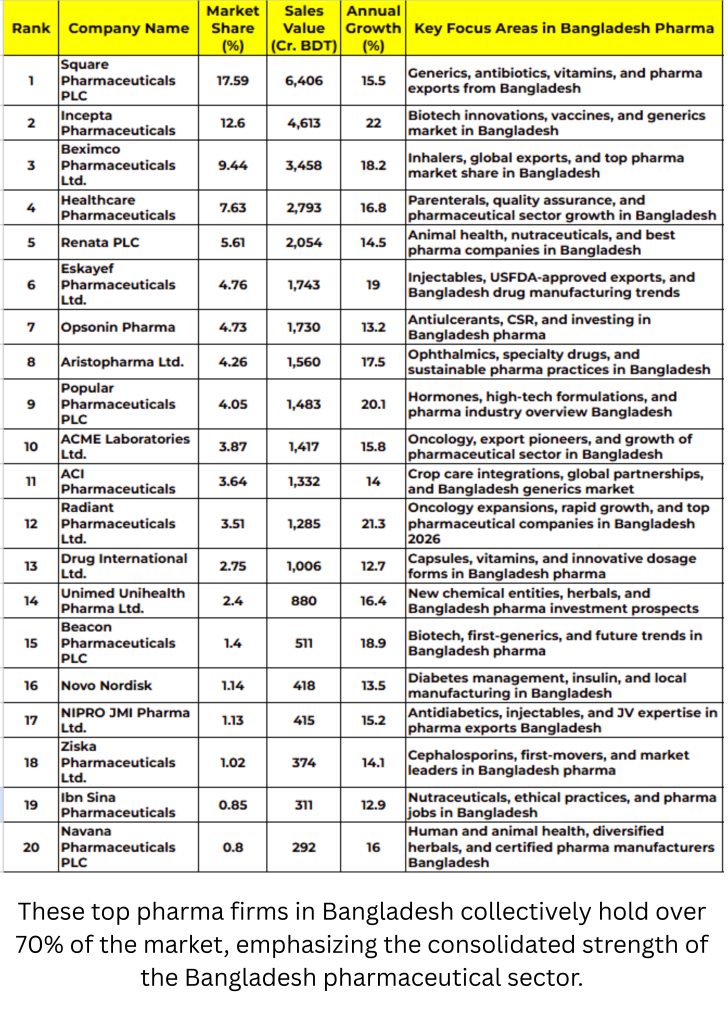
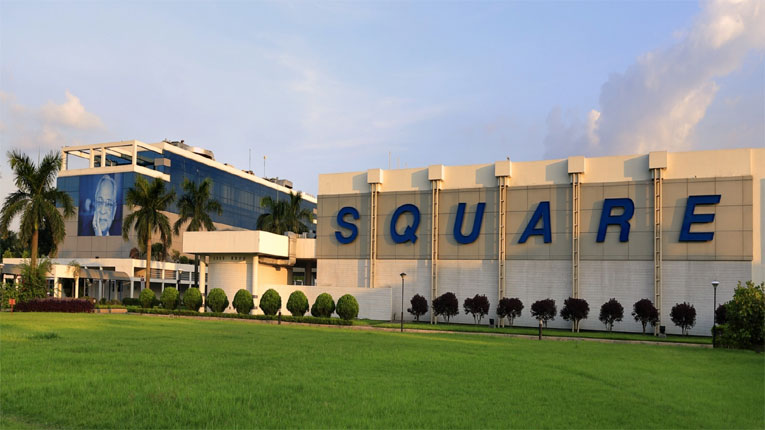
Square Pharmaceuticals PLC reigns supreme in the “top 10 pharmaceutical companies in Bangladesh,” commanding a 17.59% market share and generating BDT 6,406 crore in sales. Founded in 1958 by Samson H. Chowdhury, this giant has become synonymous with “best pharma companies in Bangladesh,” pioneering exports since 1987 and maintaining leadership since 1985.
Delving into its history, Square started small but scaled up with modern facilities in Pabna and Dhaka, focusing on “generics manufacturing in Bangladesh.” Its product lineup includes over 919 items, from antiulcerants like Seclo to antibiotics and cardiovascular drugs, all certified by US FDA and UK MHRA. Achievements abound, including multiple National Export Trophies and a market cap of USD 1.6 billion, underscoring its role in “pharma exports from Bangladesh.”
Looking ahead, Square’s strategies involve R&D investments and sustainable practices, addressing “sustainable pharma practices in Bangladesh” while targeting regulated markets. For investors eyeing “investing in Bangladesh pharma,” Square offers stability and growth. Its commitment to quality has made it a benchmark in the “pharmaceutical sector growth in Bangladesh,” with annual turnover growth reflecting robust management. Square also emphasizes CSR, supporting healthcare in rural areas, which enhances its reputation in the “Bangladesh generics market.”
As the second-ranked entity in “Bangladesh pharma rankings,” Incepta Pharmaceuticals holds 12.60% market share with BDT 4,613 crore sales. Established in 1999, it exemplifies “biotech innovation in Bangladesh pharma,” growing rapidly through a focus on vaccines and high-tech generics.
Its journey from a Dhaka startup to a global exporter to 100+ countries highlights “growth of pharmaceutical sector in Bangladesh.” Products like human insulin and rabies vaccines lead the “Bangladesh generics market,” backed by EMA-compliant facilities. Awards such as Asia’s Best Employer Brand reflect its excellence, while 2026 launches in metabolic drugs boost its profile.
Future plans include expanding biotech capabilities, aligning with “future trends in Bangladesh pharma” for a 20% CAGR. Incepta’s R&D center invests heavily in novel formulations, positioning it as a key player in “pharma exports Bangladesh.” The company’s emphasis on employee training ensures innovation, making it attractive for “pharma jobs in Bangladesh.” Overall, Incepta represents the dynamic “pharma industry overview Bangladesh,” blending tradition with cutting-edge technology.

Beximco secures third place in “market share of pharma companies in Bangladesh” with 9.44% share and BDT 3,458 crore sales. Since 1976, it’s pioneered “pharma exports Bangladesh” to the US and EU, becoming the first Bangladeshi firm to list on London’s AIM in 2005.
Specializing in inhalers and antivirals like Emorivir, Beximco’s portfolio supports “Bangladesh drug manufacturing trends.” Certifications from Health Canada and acquisitions like Sanofi Bangladesh mark its achievements. Vision 2030 targets USD 500 million exports, making it a prime choice for “Bangladesh pharma investment prospects.”
Beximco’s state-of-the-art facilities in Tongi emphasize quality, contributing to the “top pharma market share in Bangladesh.” Its role in COVID-19 response, producing remdesivir, showcased resilience in the “pharmaceutical industry in Bangladesh.” For sustainability, Beximco adopts eco-friendly processes, aligning with “sustainable pharma practices in Bangladesh.”
With 7.63% market share, Healthcare Pharmaceuticals embodies “pharmaceutical sector growth in Bangladesh,” focusing on parenterals since 1988. Its Roche-licensed facilities produce anti-infectives and oncology drugs, exported across Asia.
MHRA certifications and 16.8% growth highlight its contributions to “certified pharma manufacturers Bangladesh.” Healthcare’s dedication to R&D has led to innovative formulations, strengthening its position in the “best pharma companies in Bangladesh.” The company’s expansion into biologics signals alignment with “future trends in Bangladesh pharma.”
In terms of CSR, Healthcare supports community health programs, enhancing its brand in the “Bangladesh generics market.” Investors interested in “investing in Bangladesh pharma” will find Healthcare’s steady growth appealing, with a focus on ethical practices.
Renata PLC captures 5.61% market share in “top pharmaceutical companies in Bangladesh 2026,” specializing in “animal health pharma in Bangladesh.” Originating as Pfizer Bangladesh in 1972, it rebranded in 1993 and now exports to over 25 countries, including as a UNICEF supplier.
Its diverse portfolio of 376 products includes antihypertensive Maxpro and nutraceuticals, reflecting “Bangladesh drug manufacturing trends.” Achievements like MHRA GMP certification and a market cap of BDT 199 billion underscore its leadership in “growth of pharmaceutical sector in Bangladesh.”
Future strategies involve biologics and market expansion into Africa, positioning Renata for sustained success in “pharma exports from Bangladesh.” The company’s integrated approach to human and animal health makes it unique in the “pharma industry overview Bangladesh,” with strong emphasis on sustainability and innovation.
Eskayef Pharmaceuticals Ltd., often known as SK+F, holds 4.76% market share with BDT 1,743 crore sales, excelling in “injectables manufacturing in Bangladesh pharma.” Founded in 1979 as a SmithKline & French subsidiary, it was acquired by Transcom Group in 1990 and rebranded in 2017, becoming a key player in “top pharma firms in Bangladesh.”
Its history includes pioneering USFDA-approved facilities, with three sites certified for exports. Products range from biologics to generics, including oncology injectables, exported to 50+ countries. This focus on high-quality standards has earned it a spot in “certified pharma manufacturers Bangladesh,” with notable achievements like being the first Bangladeshi company to export injectables to the US in 2023.
Eskayef’s R&D investments drive innovation, aligning with “future trends in Bangladesh pharma” such as personalized medicine. For “investing in Bangladesh pharma,” its 19% growth rate and global partnerships offer promising returns. Sustainability efforts, including energy-efficient plants, address “sustainable pharma practices in Bangladesh,” while CSR initiatives support education and health in local communities.
Opsonin Pharma commands 4.73% market share and BDT 1,730 crore in sales, representing a cornerstone of “pharmaceutical industry in Bangladesh” since 1956. Founded by Abdul Khaleque Khan, it’s one of the oldest pharma firms, evolving into a producer of 281 brands across generics and antiulcerants.
Its growth story includes ISO 9001 certification and exports to Asia and Africa, highlighting “pharma exports Bangladesh.” Key products like antibiotics and vitamins dominate the “Bangladesh generics market,” with achievements including multiple quality awards and contributions to national health campaigns.
Looking forward, Opsonin plans to enter nutraceuticals, tapping into “growth of pharmaceutical sector in Bangladesh.” Its strong CSR focus, including free clinics, enhances its reputation in “best pharma companies in Bangladesh.” Investors seeking ethical opportunities in “Bangladesh pharma investment prospects” will appreciate its stable 13.2% growth and community-oriented approach.
With 4.26% market share and BDT 1,560 crore sales, Aristopharma Ltd. stands out in “ophthalmics pharma in Bangladesh” since its founding in 1986. Starting with basic formulations, it expanded to inhalers and suppositories, becoming a leader in specialty drugs.
Exports to 20+ countries, including being the first to ship ophthalmics to Hong Kong, underscore its role in “pharma exports from Bangladesh.” Products like eye drops and generics are backed by ISO 9001, contributing to “top pharma market share in Bangladesh.”
Achievements include rapid portfolio growth and oncology launches. Future plans focus on high-value specialties, aligning with “future trends in Bangladesh pharma.” Aristopharma’s commitment to “sustainable pharma practices in Bangladesh” includes waste reduction, making it appealing for eco-conscious investors in “investing in Bangladesh pharma.”
Popular Pharmaceuticals PLC holds 4.05% market share with BDT 1,483 crore sales, pioneering “biotech in Bangladesh pharma” since 2002. Its vertical integration has propelled it to top ranks, focusing on hormones and high-tech formulations.
Products like insulin and generics export to 31 countries, reflecting “Bangladesh drug manufacturing trends.” WHO cGMP certification and awards for innovation highlight its achievements in “growth of the pharmaceutical sector in Bangladesh.”
Expansion into advanced therapies positions it for “future trends in Bangladesh pharma,” with 20.1% growth attracting “Bangladesh pharma investment prospects.” Popular’s R&D emphasis and employee development create opportunities for “pharma jobs in Bangladesh.”
ACME Laboratories Ltd. secures 3.87% market share and BDT 1,417 crore sales, a veteran since 1954 in “oncology pharma in Bangladesh.” Converted to private limited in 1976, it pioneered exports in the 1990s.
Over 200 generics, including oncology drugs, are exported to the UK and US, making it a key in “pharma exports Bangladesh.” Firsts like UK exports in 2019 and US in 2020, plus WHO prequalification, mark its milestones.
Future strategies include capacity expansion, supporting “pharmaceutical sector growth in Bangladesh.” ACME’s focus on quality and innovation makes it a solid choice for “investing in Bangladesh pharma.”
ACI Pharmaceuticals, with 3.64% market share and BDT 1,332 crore sales, diversifies into crop care since 1992, evolving from ICI divestment. Exports to 30 countries position it in “Bangladesh generics market.”
Products like generics and first US exports from Bangladesh highlight “Bangladesh drug manufacturing trends.” ISO certifications and global ties enhance its profile in “top pharmaceutical companies in Bangladesh 2026.”
Plans for Africa expansion align with “future trends in Bangladesh pharma,” offering “Bangladesh pharma investment prospects.”

Radiant Pharmaceuticals Ltd. claims 3.51% market share with BDT 1,285 crore sales, growing rapidly since 2005 with Roche licensing. Oncology focus drives “pharmaceutical industry in Bangladesh.”
Generics and acquisitions like Novartis stakes mark achievements, with GMP from Zimbabwe. High 21.3% growth signals potential in “growth of pharmaceutical sector in Bangladesh.”
Sustainability and expansion make it notable for “sustainable pharma practices in Bangladesh.”

Drug International Ltd. holds 2.75% market share and BDT 1,006 crore sales, innovating since 1974 with soft capsules. Vitamins and generics lead its portfolio.
Firsts like vaginal suppositories highlight “Bangladesh drug manufacturing trends.” Biotech entry plans align with “future trends in Bangladesh pharma.”

Unimed Unihealth Pharma Ltd. has 2.40% market share with BDT 880 crore sales, focusing on NCEs since 1997. Herbals and diagnostics diversify its offerings.
Rapid growth and partnerships enhance “Bangladesh pharma investment prospects.”

Beacon Pharmaceuticals PLC captures 1.40% market share with BDT 511 crore sales, pioneering oncology exports since 2001. First generics like Tagrix stand out.
Biotech scaling positions it for “growth of pharmaceutical sector in Bangladesh.”

Novo Nordisk, with 1.14% market share and BDT 418 crore sales, specializes in “diabetes pharma in Bangladesh” through local partnerships like Eskayef.
Insulin products like Mixtard support local manufacturing, contributing to “pharma exports Bangladesh.”

NIPRO JMI Pharma Ltd. holds 1.13% market share with BDT 415 crore sales, a Japan-Bangladesh JV since 2012 focusing on antidiabetics.
Over 100 products and export growth highlight its role in “top pharma firms in Bangladesh.”
Ziska Pharmaceuticals Ltd. has 1.02% market share and BDT 374 crore sales, innovating since 1986 with cephalosporins.
ISO certifications and exports since 2009 strengthen “Bangladesh generics market.”
Ibn Sina Pharmaceuticals claims 0.85% market share with BDT 311 crore sales, ethical since 1983 with 450+ products.
CSR and natural medicines expansion align with “sustainable pharma practices in Bangladesh.”

Navana Pharmaceuticals PLC rounds out with 0.80% market share and BDT 292 crore sales, part of Jahurul Islam Group since 1992.
Human/animal generics and ISO awards make it versatile in “pharma industry overview Bangladesh.”

For pharmaceutical companies operating in Bangladesh, maintaining an efficient field force and ensuring timely deliveries of medicines are just as critical as production and quality control. Tools like Kothay.app can help pharma businesses track sales representatives, delivery agents, and field technicians in real time, streamline route planning, and monitor attendance. By integrating Kothay into daily operations, companies can improve productivity, reduce delays in drug distribution, and gain actionable insights into field performance. Whether you manage a growing generics business, oversee vaccine distribution, or coordinate nationwide supply chains, sales tracking software ensures your team is always connected and accountable, supporting the continued growth of the pharmaceutical sector in Bangladesh.
For queries on investing in Bangladesh pharma, listed firms like Square and Beximco offer promising stocks. The sector’s 15% average growth attracts FDI, while pharma jobs in Bangladesh span R&D, sales, and manufacturing, with over 10,000 new roles annually.
Addressing API import dependency in Bangladesh, firms are building local parks. Sustainability efforts tackle environmental concerns, promoting sustainable pharma practices in Bangladesh.
AI and blockchain enhance supply chains, aligning with digital trends in Bangladesh pharma.
The top pharmaceutical companies in Bangladesh 2026 are ranked by market share, with Square leading at 17.59%, followed by Incepta and Beximco, focusing on generics and exports.
Through “pharma exports from Bangladesh,” the industry supplies affordable drugs to 150+ countries, boosting the “Bangladesh generics market” presence.
Most hold WHO GMP, US FDA, and UK MHRA, ensuring quality in “certified pharma manufacturers Bangladesh.”
With a 12-15% CAGR, “Bangladesh pharma investment prospects” are strong, especially in biologics and exports.
From import-heavy to self-reliant, the “growth of pharmaceutical sector in Bangladesh” features 17% annual increases, driven by policy and innovation.
Yes, companies emphasize “sustainable pharma practices in Bangladesh,” including green manufacturing and waste reduction.
The pharmaceutical industry in Bangladesh is a testament to innovation, with the top 20 companies leading the charge. As searches for “top pharma firms in Bangladesh” rise, this sector promises continued expansion. Stay tuned for updates on “Bangladesh pharma trends 2026.”

Can Your Employer Track Your Location Employee locat...

Selling is an art. You need skill, patience, and a genu...

I know how tough it can be to juggle multiple client vi...
Sign up now to simplify your sales operations, improve productivity, and make data-driven decisions. Choose your plan, add your team, and unlock the full potential of your sales strategy. Don’t wait – elevate your sales management game and drive success with us!
Get Started