মোবাইল ও গ্যাজেট
আজকের দ্রুতগতির ব্য�...
Efficient delivery operations are the backbone of any modern business, particularly in eCommerce, retail, and wholesale distribution. In Bangladesh, the rapid growth of online shopping with the B2C e-commerce market projected to reach around US$7.4 billion by 2025 and expand toward US$9.65 billion by 2029 has created unprecedented demand for faster, more reliable deliveries. Customers now expect real-time updates, timely arrivals, and smooth last-mile experiences, whether in Dhaka’s congested streets or rural areas with challenging infrastructure.
Despite this growth, many businesses still rely on manual tracking, handwritten logs, and basic communication methods, which often lead to delays, lost orders, and frustrated customers. Dhaka’s heavy traffic, seasonal floods, and rural road gaps further complicate delivery operations, highlighting the need for smarter solutions.
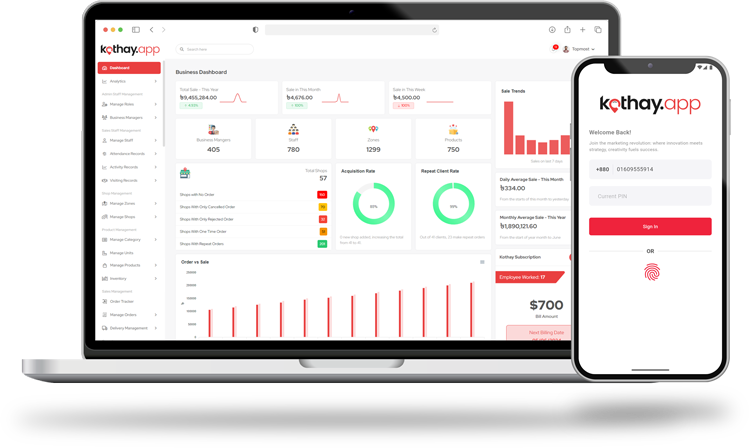
Advanced delivery management tools are transforming this landscape. Platforms like Kothay.app, designed specifically for Bangladesh, provide real-time tracking of delivery personnel, task assignment, route optimization, store-wise delivery management, and offline functionality. These tools give managers full visibility, streamline workflows, reduce errors, and empower field teams to deliver faster and smarter.
Delivery operations involve the planning, coordination, and execution of product deliveries from warehouses or sorting hubs to end customers, retail outlets, or distributors. In Bangladesh’s fast-growing market, these operations cover everything from same-day urban deliveries in Dhaka to multi-day shipments across 64 districts and remote haats.
Key Components of Delivery Operations include:
Businesses often face unique logistical challenges due to extreme traffic congestion in Dhaka and Chittagong (where congestion alone can double standard trucking costs), poor road conditions in rural areas, limited multimodal options (heavy reliance on road transport), and high seasonality (Eid peaks, monsoon disruptions).
With e-commerce volumes surging and traditional trade still dominating 95%+ of retail, delivery teams must handle thousands of daily orders across chaotic urban streets and challenging rural routes. Efficient delivery operations are no longer a nice-to-have they are a critical competitive advantage.
Many businesses in Bangladesh struggle to manage delivery operations efficiently, leading to higher costs, lost sales, and unhappy customers.
Major Challenges include:
These issues are amplified during peak seasons. Without modern tools, even well-intentioned teams waste fuel, time, and resources while struggling to maintain service levels in a market where customers now expect 1–2 day delivery in major cities.
Delivery management tools are specialized software solutions designed to help businesses plan, track, and optimize every aspect of their delivery operations. They act as a centralized digital command center, replacing fragmented manual processes with automated, real-time workflows.
These tools integrate order data, driver locations, vehicle status, and customer information into one platform accessible via mobile apps for field teams and web dashboards for managers.
By automating delivery processes, businesses can dramatically improve efficiency, reduce operational errors, cut costs, and deliver a superior customer experience even amid Bangladesh’s complex geography and infrastructure challenges.
Modern delivery management tools are mobile-first, offline-capable, and built for emerging markets like Bangladesh. Here are the most impactful features:
Real-Time GPS Tracking
Businesses monitor delivery vehicles and drivers live on a map.
Benefits: Better visibility of progress, faster response to delays or issues (e.g., traffic rerouting), and improved security for high-value shipments.
Route Optimization
Advanced algorithms automatically calculate the most efficient routes considering traffic, distance, vehicle capacity, and delivery windows.
Advantages: Reduced travel time (often 15–30% faster), lower fuel consumption, and quicker overall deliveries.
Task and Delivery Assignment
Managers assign tasks digitally with clear instructions, photos, or notes. Drivers receive instant notifications on their phones.
Features: Automated scheduling, priority-based assignment, and dynamic reallocation if delays occur.
Delivery Status Updates
Track every stage: “Order Picked Up,” “Out for Delivery,” “Delivered,” or “Failed Attempt.”
Examples: Customers receive automated SMS/WhatsApp updates; managers get alerts for exceptions. Proof-of-delivery via photos or OTP adds reliability.
Performance Monitoring and Reporting
Dashboards provide insights into delivery time analysis, driver productivity, on-time rates, route efficiency, and cost per delivery.
These reports help identify bottlenecks and reward top performers.
Platforms like Kothay.app include additional Bangladesh-specific strengths: store-wise delivery management, order editing until delivery, sales return tracking, full offline mode, and geo-fencing for zone control, making them ideal for mixed urban-rural operations.
Adopting advanced delivery management tools delivers measurable, compounding advantages:
Improved Operational Efficiency
Automation eliminates manual coordination and phone calls. Teams process and execute more deliveries with fewer errors, often increasing daily capacity by 20–40%.
Faster Deliveries
Optimized routes and real-time adjustments cut average delivery times significantly. In congested Dhaka, dynamic rerouting alone can save hours per shift.
Reduced Operational Costs
Efficient route planning lowers fuel consumption (savings of 15–25% typical), reduces vehicle wear, and minimizes overtime. Overall logistics costs, which can represent 17–56% of inventory expenses in Bangladesh, drop noticeably.
Better Customer Experience
Accurate ETAs, live tracking links, and fewer failed attempts build trust. Customers in rural areas or busy cities appreciate proactive updates, leading to higher satisfaction and repeat orders.
Increased Business Scalability
Businesses can handle growing order volumes (especially during e-commerce peaks) without proportionally increasing staff or vehicles. This scalability is crucial as Bangladesh’s e-commerce market continues its strong upward trajectory.
Real implementations show impressive ROI: faster on-time delivery rates (up to 98% in local pilots), reduced complaints, and payback periods as short as 3–6 months.
eCommerce Businesses
Online retailers like Daraz or smaller platforms use delivery management tools to handle thousands of daily parcels. Real-time tracking and route optimization ensure 1–2 day fulfillment in cities while maintaining visibility across the country.
Courier and Logistics Companies
Companies such as Steadfast, REDX, Pathao Courier, and eCourier rely on these tools to track hundreds of agents, optimize multi-stop routes, and provide customer-facing tracking links, dramatically improving success rates in COD-heavy operations.
Retail and Wholesale Distributors
FMCG and pharmaceutical wholesalers coordinate deliveries to thousands of kirana stores and pharmacies. Tools enable store-wise planning, return management, and performance monitoring across districts.
Food and Grocery Delivery Services
Platforms like Pathao Food, Foodpanda, or local grocery apps use live tracking and dynamic routing so customers can watch their orders approach in real time, reducing anxiety and boosting on-time performance even during rush hours.
In every sector, businesses combining these tools with local knowledge (traffic patterns, festival impacts, rural road conditions) achieve faster cycles, lower costs, and stronger customer loyalty.
Although the benefits are substantial, businesses, especially SMEs, may face several challenges when adopting these technologies.
Initial technology investment: Setup costs for software, driver smartphones, or integration can seem daunting for smaller operations.
Employee training: Delivery teams and managers accustomed to manual methods need time to learn apps and new workflows.
Technology adoption: Shifting from phone calls and notebooks to digital systems requires cultural change and consistent usage.
Connectivity issues: Real-time tracking depends on reliable mobile networks, which can be inconsistent in rural areas or during power outages (though offline modes help significantly).
These hurdles are common in Bangladesh but are increasingly manageable with affordable SaaS pricing, Bengali interfaces, and offline-first designs.
Businesses can improve implementation success by following proven best practices tailored to local realities.
Best Practices include:
Companies that treat implementation as a change-management project (with incentives for app usage) typically achieve 90%+ adoption rates and full ROI within months.
Technology is rapidly transforming delivery operations worldwide, and Bangladesh is poised to benefit.
Emerging Innovations include:
As 5G expands and AI adoption grows, even small businesses will access enterprise-level capabilities, reducing costs further, opening more rural markets, and enabling same-hour deliveries in major cities.
Modern platforms such as Kothay.app are helping Bangladeshi businesses manage delivery teams and logistics operations more effectively than ever before.
Key Capabilities include:
These tools allow businesses to improve transparency, coordination, and efficiency in delivery operations. Kothay.app’s offline mode ensures functionality in rural areas or during network gaps, while its Bangladesh-specific design handles local challenges like traffic and seasonal disruptions perfectly. A Sylhet-based FMCG distributor using similar capabilities achieved 98% on-time deliveries (up from 81%), 46% faster order-to-delivery cycles, and a 60% drop in customer complaints, all while scaling operations without adding headcount.
For e-commerce, retail, wholesale, or food delivery businesses, Kothay.app bridges the gap between order placement and successful fulfillment, turning delivery from a cost center into a growth driver.
Efficient delivery is crucial for businesses in Bangladesh, where traffic, infrastructure, and rising e-commerce demand make manual processes costly and slow. Platforms like Kothay.app offer real-time tracking, route optimization, and full control over field operations, helping businesses reduce delays, cut costs, and improve customer satisfaction. Whether you run an e-commerce store or a nationwide distribution network.
Kothay.app empowers you to deliver smarter and faster. Register today or try the free plan to optimize your deliveries instantly.


For small and medium businesses in Bangladesh, managing...

Sign up now to simplify your sales operations, improve productivity, and make data-driven decisions. Choose your plan, add your team, and unlock the full potential of your sales strategy. Don’t wait – elevate your sales management game and drive success with us!
Get Started