How to Manage Sales Employees Across Differen
Managing sales employees across Bangladesh’s 64 distr...

Bangladesh’s pharmaceutical sector is one of the country’s fastest-growing industries, valued at over USD 3.5 billion in 2026 with a CAGR of 12–15%. Local production meets 98% of demand, and leading companies such as Square Pharmaceuticals, Incepta, and Beximco dominate the market. Field sales teams, particularly Medical Representatives (MRs), are crucial in promoting products, educating doctors, and collecting orders, directly influencing prescriptions and revenue.
Managing large, mobile teams is challenging. Manual tracking through paper reports, phone updates, and spreadsheets leads to errors, missed visits, and delayed insights. Dhaka’s traffic, limited rural infrastructure, and DGDA compliance requirements make efficient oversight even more challenging.
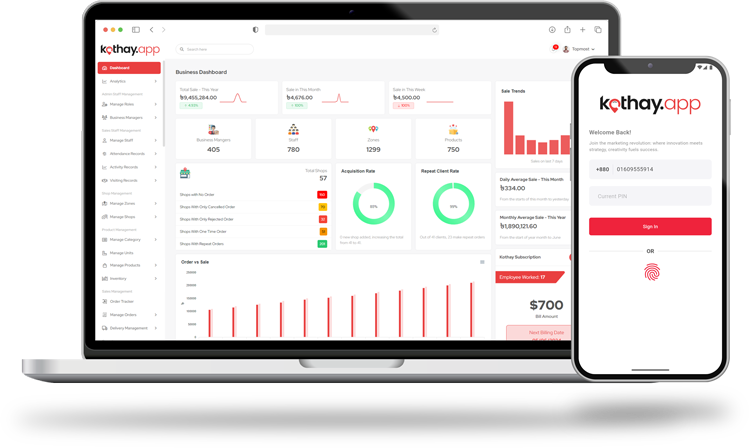
Modern digital solutions like Kothay.app are changing the game. With real-time GPS tracking, digital visit logging, order and sample management, geo-fencing, and offline functionality, Kothay.app ensures MRs stay productive while managers gain full visibility. Live dashboards and automated reporting simplify monitoring, reduce costs, and improve doctor engagement.
Pharmaceutical Companies in Bangladesh using Kothay.app can boost field productivity, increase order collection, and drive revenue growth all while ensuring compliance and operational efficiency across Bangladesh’s diverse markets.
Field sales (or Medical Representative networks) remain the primary engine of growth for pharmaceutical companies in Bangladesh. Unlike consumer goods, pharma products are prescription-driven, so success depends heavily on building trust and educating healthcare professionals.
MRs play multiple strategic roles:
Traditional methods relied almost entirely on manual processes: MRs maintained handwritten call books, submitted daily or weekly paper reports, coordinated via phone calls, and planned routes based on experience or printed maps. While these approaches worked in smaller operations, they have become unsustainable as companies expand into more districts and product portfolios grow.
Limitations of traditional field sales management are now glaring:
In an industry where even a 5–10% improvement in field productivity can translate into millions in additional revenue, these limitations directly impact market share and patient access to medicines.
Pharmaceutical field operations in Bangladesh face a unique combination of geographic, operational, and regulatory hurdles:
The cumulative impact is significant: lower productivity, higher operational costs, delayed revenue realization, reduced doctor engagement, and ultimately slower growth and compromised patient care. In a competitive market where top companies fight for prescription share, these challenges can erode market position quickly.
Field sales solutions are technology-driven platforms that digitize the entire workflow of medical representatives from daily planning and visit execution to reporting and analytics. These tools typically combine mobile apps for field teams with cloud dashboards for managers.
They streamline daily operations through:
For pharmaceutical companies in emerging markets like Bangladesh, these solutions offer particular value: they work offline in rural areas, support compliance through audit trails, reduce travel waste in traffic-heavy cities, and scale easily as teams grow. The result is higher field productivity, better doctor relationships, improved inventory control, and measurable revenue uplift.
The most effective solutions are mobile-first, offline-capable, and designed with pharmaceutical-specific needs in mind. Key features include:
Sales Tracking & Monitoring
Track every doctor call, pharmacy visit, and sample delivery with geo-verified check-ins. Performance dashboards show calls per day, conversion rates, and product-wise performance.
Benefit: Clear visibility into what each MR is achieving in real time.
Geo-Location & Route Optimization
GPS tracking combined with intelligent route planning that considers traffic, distance, and priority clinics.
Benefit: Saves hours daily on travel, reduces fuel costs, and allows more calls per day.
Attendance & Workforce Management
Automatic check-ins at each location track work hours, visits, and productivity metrics in real time, ensuring seamless management of field teams.
Benefit: Accurate payroll, fair performance evaluation, and elimination of ghost visits.
Order Management & Inventory Control
Instantly record orders digitally while monitoring stock levels and receiving expiry alerts, ensuring timely replenishment and smooth inventory management.
Benefit: Prevents stockouts at pharmacies and ensures timely replenishment.
Reporting & Analytics
Automated daily/weekly reports with visual insights into sales trends, territory coverage, and doctor engagement.
Benefit: Managers get actionable data instead of waiting for manual summaries.
Compliance & Audit Trails
Complete digital logs of visits, samples distributed, and promotional activities are fully auditable for DGDA requirements.
Benefit: Reduces regulatory risk and simplifies audits.
Platforms like Kothay.app combine all these features in one affordable, Bangladesh-optimized package with full offline support and simple Bengali interfaces.
Adopting a modern field sales solution delivers transformative results:
In Bangladesh’s competitive pharma landscape, these benefits translate into higher market share and stronger patient impact.
Kothay.app is a locally developed field sales management platform that has proven highly effective for pharmaceutical companies in Bangladesh. Designed for mobile field teams, it addresses the exact pain points of MRs and sales managers.
Features specifically beneficial for pharmaceutical sales teams include:
Real-world implementations in Bangladesh (including similar field service and distribution teams) show MRs achieving higher daily calls, managers gaining complete visibility, reduced travel costs, and improved compliance reporting. One Sylhet-based distributor using comparable capabilities reported 98% on-time performance and significant productivity gains that translate directly to pharmaceutical field teams handling doctor visits and medicine distribution.
With affordable pricing, Bengali support, and dedicated local customer service, Kothay.app is practical and scalable for both large pharma companies and growing local manufacturers.
Successful implementation follows a structured approach:
Most companies see full adoption within 3–6 months and measurable ROI through higher productivity and lower costs.
The future of field sales in Bangladesh’s pharma industry is digital, intelligent, and data-driven:
These trends will help companies maintain high service standards while scaling efficiently, ensuring better medicine availability and stronger healthcare outcomes across the country.
Modern field sales solutions are no longer optional for pharmaceutical companies in Bangladesh; they are essential to overcome operational challenges, ensure regulatory compliance, and drive sustainable growth in a $3.5+ billion market. Manual processes cause delays, errors, and missed opportunities, while digital platforms transform how Medical Representatives operate.
Kothay.app provides real-time tracking, automated reporting, route optimization, digital order management, and performance analytics. These tools improve MR productivity, enhance doctor engagement, reduce operational costs, and boost revenue.
The time to digitize your field operations is now. Start a free trial or demo of Kothay.app and equip your sales team to visit more doctors, manage orders efficiently, and grow your business while ensuring better access to medicines across Bangladesh.

Managing sales employees across Bangladesh’s 64 distr...
Tracking sales representatives and shop visits is essen...
Sales teams, especially field sales representatives, ar...
Sign up now to simplify your sales operations, improve productivity, and make data-driven decisions. Choose your plan, add your team, and unlock the full potential of your sales strategy. Don’t wait – elevate your sales management game and drive success with us!
Get Started