L’expérience utilisateur chez Magical Spin
Qu’est-ce qui distingue Magical Spin dans l’univers...
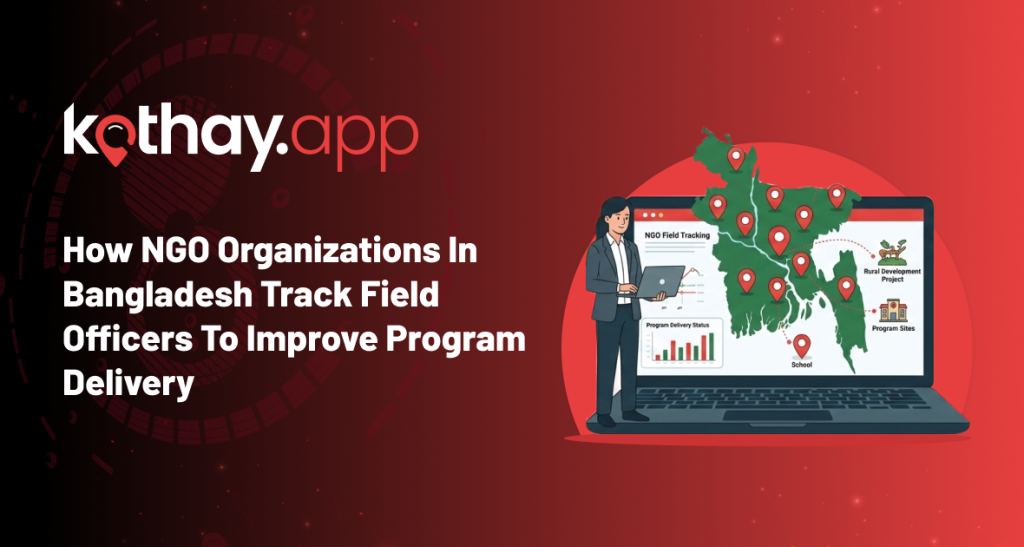
NGOs are the lifeline of development work across Bangladesh, from the haors of Sylhet to the coastal belts of Cox’s Bazar and the char lands of the Jamuna River. Thousands of field officers, community workers, programme organisers, and health volunteers implement projects on the ground, including community visits, health and nutrition surveys, school enrolment monitoring, flood relief distribution, and microfinance disbursement. Their efficiency and accountability directly affect the success of programmes and the trust of donors.
Managing these mobile teams has traditionally been challenging. Paper reports are delayed, phone updates can’t be verified, and remote locations remain invisible, often leading to missed visits, duplicated efforts, and inaccurate data. For NGOs relying on timely, verifiable results, these gaps risk both programme impact and future funding.
Real-time digital tracking transforms field management. GPS-enabled mobile apps, geofencing, offline data capture, and cloud dashboards enable managers to see exactly where field officers are, what tasks are completed, and any challenges they face almost instantly. Tools like Kothay.app are built for Bangladesh, offering GPS tracking, geo-fenced visit verification, attendance, task logging, and offline functionality. This enables NGOs to manage field officers as efficiently as corporate sales teams, while remaining cost-effective for non-profit budgets.
Leading NGOs such as BRAC have already digitised thousands of field staff, saving millions in monitoring costs and improving programme delivery. Platforms like Kothay.app provide local NGOs with the same benefits, better accountability, faster decision-making, and real-time insights that ensure programmes reach the people who need them most.
Field officers are the human face of every NGO programme in Bangladesh. A typical day might include:
Timely and accurate reporting is non-negotiable. Donors demand evidence of reach, impact, and proper fund use. Yet field officers operate in some of the toughest conditions: poor roads, frequent power cuts, limited mobile network in rural areas, and heavy workloads. One officer may cover 200–300 households spread across several square kilometres, often travelling by bicycle or boat.
Examples from major sectors:
The pressure is immense. Delays or inaccuracies in reporting can mean delayed interventions, wasted resources, or even loss of donor trust.
For decades, NGOs relied on paper registers, weekly SMS updates, or phone calls to branch managers. Field officers would fill forms by hand, travel back to the office to submit them, or dictate details over crackling phone lines.
The limitations are severe:
Delayed data: Reports often arrive days or weeks late, making real-time action impossible.
Manual errors: Handwritten entries lead to wrong names, missed households, or fabricated visits.
No visibility: Managers have no way of knowing if an officer actually reached a remote village or stayed home.
Weak accountability: Proxy attendance and inflated visit numbers are common.
Poor donor reporting: Inaccurate data damages credibility when submitting quarterly reports to international funders.
Real examples abound. Before digitisation, BRAC health workers spent entire days travelling just to submit paper reports. In disaster response, delayed information has meant relief reaching communities too late. One study of Bangladeshi NGOs highlighted how manual systems caused duplicated visits while some beneficiary groups were completely missed, directly affecting programme quality and funding renewals.
The impact on donor decisions is critical. International funders now require verifiable, real-time evidence of impact. Paper-based systems simply cannot compete.
Digital tracking uses smartphones or tablets combined with specialised apps to monitor field officers in real time or near-real time. Core technologies include:
These tools work even on basic Android phones. Officers open the app, log their start time (with GPS verification), complete tasks (health screening, loan collection, survey), upload photos or signatures, and sync data when connectivity returns.
Mobile-first design is essential. Field officers rarely carry laptops; everything must work on the phone they already own. Platforms built for Bangladesh, like Kothay.app, offer exactly this: simple login with mobile number and PIN, geo-fenced check-ins, task lists, photo reports, and automatic attendance, perfectly suited for NGO field officers who move between remote communities.
Digital tracking delivers measurable improvements across four key areas:
Improved Program Delivery
Real-time visibility allows instant rerouting. If one officer finishes early, a nearby urgent case can be assigned immediately. BRAC’s digitisation of 4,100 shasthya kormi reduced administrative travel and enabled faster disease screening and follow-up.
Accountability and Transparency
Geo-fencing and photo verification eliminate fake visits. Managers see exactly who visited which household and when. Absenteeism drops dramatically.
Data Accuracy
Electronic forms with validation rules prevent common errors. Data flows directly into central systems, no more manual copying. BRAC’s digital health database now tracks 150 data points per person across 64 million beneficiaries.
Resource Optimization
Managers allocate staff and transport based on live data. Unnecessary trips are eliminated. BRAC saved approximately USD 3.8 million per year in monitoring costs after digitising community health workers.
Before-and-after comparison (BRAC health programme):
Other NGOs report 30–50% increases in households reached and significant improvements in donor satisfaction.
Health Programs
BRAC equipped over 4,100 shasthya kormi with Android tablets during the COVID-19 pandemic. Workers now record symptoms, vaccinations, and follow-ups in real time. The system flagged high-risk cases and linked patients to telemedicine hotlines (800+ calls daily). Tuberculosis tracking alone covered 1.4 million samples with real-time national-level analysis.
Education Programs
NGOs running school enrolment drives use geo-fenced apps to verify visits to out-of-school children. Managers track daily progress and reallocate staff to low-coverage areas.
Microfinance Programs
Loan officers log group meetings and repayments via mobile apps with photo proof. Real-time dashboards show repayment rates and flag potential defaults early.
Disaster Response
During floods, relief teams use GPS tracking to coordinate distribution. Managers see which unions have been covered and redirect teams instantly, preventing overlap and gaps.
Mini case study – BRAC’s Ultra-Poor Graduation Programme: Over 2,700 staff across 244 offices now use a digital platform with task scheduling, automatic reminders, and real-time reports. Field officers receive daily plans on their phones, complete coaching and health checks, and upload progress instantly. Managers get aggregated insights for immediate strategy adjustments, dramatically improving graduation rates for ultra-poor families.
These examples show how digital tracking turns field officers from isolated workers into a coordinated, responsive force.
Popular solutions in Bangladesh include:
– Open-source tools like KoBo Toolbox and ODK (used by BRAC and many smaller NGOs for offline surveys).
– Custom mHealth apps like BRAC’s OpenSRP-based platform.
– Integrated platforms with GPS + task management.
Kothay.app stands out as a locally developed, affordable option specifically built for Bangladesh’s field conditions. Its features, real-time GPS tracking, geo-fencing, attendance with check-in/out, task assignment, photo verification, offline mode, and manager dashboard make it highly suitable for NGOs managing field officers. The mobile-first design works on basic Android phones common among community workers, and local support in Dhaka ensures quick onboarding.
Many NGOs combine GPS tracking (for location and attendance) with data collection tools (for surveys), creating a complete field management system.
Bangladesh’s context creates specific hurdles:
Internet connectivity: Rural and hilly areas often have weak or no signal.
Digital literacy: Many field officers have limited smartphone experience.
Resistance to change: Staff worry about constant monitoring or extra workload.
Data privacy: Concerns about sharing location or beneficiary information.
Successful NGOs overcome these through:
– Offline-first apps that sync automatically when connected.
– Short, hands-on training (BRAC trained thousands of health workers remotely during COVID).
– Clear communication: “This tool helps you work smarter and protects you with verifiable records.”
– Strong data security and compliance with Bangladesh’s Digital Security Act and donor standards.
Common pitfalls to avoid: forcing full rollout without training or using tracking solely for surveillance.
The next wave is already here:
BRAC is already experimenting with big data analytics and machine learning on field data. NGOs that adopt these early will attract more funding, deliver faster impact, and build stronger donor confidence.
Local platforms like Kothay.app are evolving rapidly, adding AI insights and expanded analytics, keeping Bangladeshi NGOs future-ready without expensive foreign software.
Digital tracking of field officers delivers what every NGO leader dreams of: higher efficiency, iron-clad accountability, accurate real-time data, optimised resources, and dramatically better programme outcomes. In Bangladesh, where millions depend on NGO services, this is no longer a luxury; it is essential for survival and growth in a competitive funding environment.
Whether you run a large organisation like BRAC or a smaller local NGO working in education, health, microfinance, or disaster response, now is the time to empower your field officers with the right technology.
Affordable, Bangladesh-made solutions like Kothay.app make it simple and cost-effective. Real-time GPS tracking, geo-fenced visits, task management, offline capability, and powerful dashboards are all available today, built for the exact conditions your teams face.
Visit kothay.app today or contact their team for a free demo tailored to NGOs. Transform your field operations, strengthen accountability, impress donors, and most importantly, reach more beneficiaries faster and more effectively.
Qu’est-ce qui distingue Magical Spin dans l’univers...
People don’t buy from businesses. They buy from other...
Сотрудничество Play'n GO и Vavada в г�...
Sign up now to simplify your sales operations, improve productivity, and make data-driven decisions. Choose your plan, add your team, and unlock the full potential of your sales strategy. Don’t wait – elevate your sales management game and drive success with us!
Get Started