Roman Casino : quelles méthodes de dépôt s
Roman Casino s’impose comme une plateforme de choix p...
Sales representatives are the backbone of every business in Bangladesh. Whether they are pushing FMCG products through crowded Dhaka markets, visiting clinics as pharmaceutical reps in Chittagong, or onboarding telecom customers in rural Sylhet, these field warriors directly drive revenue, build customer relationships, and expand market reach. In a country where distribution networks span urban megacities, semi-urban hubs, and remote villages, effective management of sales teams is the difference between hitting targets and falling short.
Yet traditional management struggles with core challenges: monitoring daily performance, verifying actual client visits, maintaining accurate customer data, and ensuring timely reporting. Traffic jams in Dhaka, poor road conditions in rural areas, and a lack of real-time oversight often lead to wasted time, missed opportunities, and inaccurate data.
Smart tools change the game. GPS tracking, mobile apps, CRM systems, and performance dashboards give managers live visibility, automate reporting, optimize routes, and deliver actionable insights. These solutions streamline operations, boost efficiency, and dramatically increase sales.
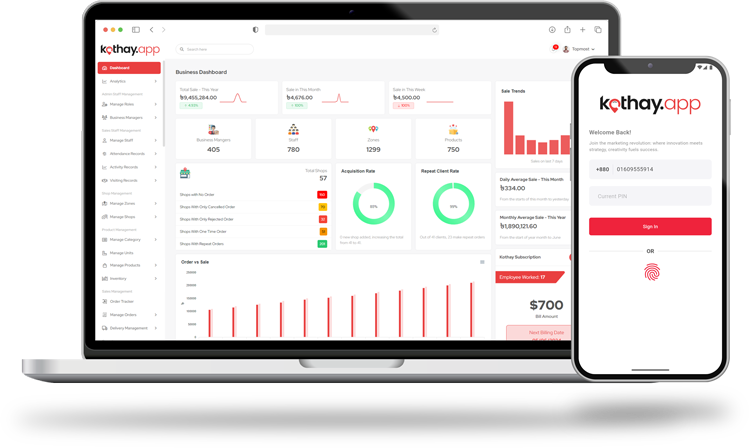
Kothay.app stands out as a locally built, affordable platform designed specifically for Bangladeshi businesses. With real-time GPS tracking, geo-fencing, route planning, task assignment, order management, and performance analytics, it empowers sales teams and managers alike without the high cost of foreign software.
Sales representatives in Bangladesh wear multiple hats every single day. Their core responsibilities include:
– Conducting client visits and outlet checks
– Generating new leads and expanding distribution
– Closing deals and taking orders on the spot
– Providing after-sales support and collecting payments
– Submitting daily reports on sales, stock, and competitor activity
Effective management is essential to achieve sales targets, maintain consistent coverage, and keep customers satisfied. Inefficient oversight directly hits the bottom line: delayed orders, stock-outs, unhappy retailers, and lost market share.
Sector-specific examples highlight the stakes:
Challenges unique to Bangladesh amplify the difficulty:
endless traffic congestion in Dhaka and Chittagong wastes hours, rural roads and weak network coverage make oversight nearly impossible, and manual processes leave managers blind to what reps are actually doing. One delayed report or unverified visit can mean lost sales worth thousands of taka.
For decades, most Bangladeshi companies relied on:
– Daily Excel sheets or WhatsApp reports
– Paper-based attendance and visit logs
– Phone calls or SMS check-ins at the end of the day
These methods create serious problems:
Delays in updates: Managers only learn about missed visits or low performance the next morning or later.
Lack of visibility: No way to confirm if a rep actually reached a client outlet or was stuck in traffic.
Errors and duplication: Handwritten notes lead to wrong figures, double entries, and fabricated data.
Inefficient route planning: Reps waste fuel and time on unplanned travel.
Real examples are common. A Dhaka-based FMCG distributor once discovered that 30% of reported visits never happened; reps were simply filling forms from home. In pharmaceutical sales, delayed reporting caused stock-outs at key pharmacies, leading to lost prescriptions. Rural telecom agents missed entire unions because managers had no live view of coverage gaps. The result? Lower revenue, frustrated customers, higher fuel costs, and demotivated teams.
Modern smart tools combine several powerful technologies tailored for Bangladeshi field conditions:
These solutions are mobile-first and cloud-based, running smoothly on affordable Android phones. They work offline in rural areas and sync automatically when connectivity returns.
Kothay.app is a prime example built for Bangladesh. It offers live GPS tracking, zone management with geo-fencing, beat planning and route optimization, task assignment, order management, one-click attendance, and automated performance reports. Managers can assign zones, track reps in real time, and receive instant alerts all while reps focus on selling instead of paperwork.
Smart tools deliver measurable gains across every aspect of field sales.
Increased Productivity
Optimized routes and automated scheduling help reps visit more outlets daily. Studies show businesses using route planners see a 30% rise in customer visits. Reps spend less time on reporting and more on closing deals.
Better Accountability
Real-time tracking and geo-fenced check-ins eliminate guesswork. Managers see exactly who visited which outlet and when. Performance becomes transparent and fair.
Improved Data Accuracy
Digital forms with photo verification and automatic calculations remove manual errors. Sales history, stock levels, and customer feedback are always accurate and instantly accessible.
Enhanced Decision-Making
Live dashboards reveal top performers, underperforming territories, and emerging trends. Managers can reallocate reps, adjust targets, or launch promotions on the same day.
Cost and Resource Optimization
Reducing unnecessary travel cuts fuel costs significantly. Better territory coverage means fewer reps can serve more outlets efficiently.
A small dairy brand in Bangladesh that piloted smart tracking saw reps meet 10% more outlets per day, and monthly sales grow by 8%. Other companies report 20–30% overall productivity gains and 15–25% reduction in travel expenses within the first few months.
FMCG Companies
Distributors and manufacturers use GPS tracking to ensure daily beat plans are followed and product displays are properly executed. Kothay.app’s photo verification feature helps confirm merchandising compliance instantly.
Telecom Sales Teams
Field agents for new connections and recharge sales are tracked in real time. Geo-fencing ensures they stay within assigned areas, while dashboards show daily onboarding numbers.
Pharmaceutical Representatives
Medical reps log doctor visits with GPS proof. Managers track prescription push and sample distribution, leading to better relationship management with healthcare professionals.
Service Providers
Door-to-door teams (insurance, solar, water purifiers) use mobile apps for lead follow-up and payment collection with instant receipt generation.
Mini case study: A regional FMCG snack brand in Bangladesh implemented Kothay.app across 50 reps. Before adoption, managers relied on evening calls and paper reports many visits went unverified, and coverage was inconsistent. After three months with real-time tracking, route optimization, and digital reporting:
The team moved from reactive management to proactive strategy, with higher motivation because performance was measured fairly and transparently.
Adoption is not always smooth. Common hurdles in Bangladesh include:
These can be overcome with the right approach. Choose affordable, offline-first tools like Kothay.app that work without constant internet. Provide short, practical training in Bengali. Communicate clearly: “This tool helps you earn more by saving time and protecting your records.” Start small and show quick wins most resistance disappears once reps see they finish work earlier and get fair recognition.
Follow these proven steps:
Businesses that follow this approach achieve 80–90% adoption within two months and see full ROI within 6–9 months.
The next 2–3 years will bring exciting advancements:
Kothay.app is already moving in this direction with performance analytics, predictive insights, and AI-assisted route planning, helping Bangladeshi businesses stay competitive without expensive foreign platforms. Early adopters will gain a clear edge in speed, efficiency, and market share.
Smart tools for managing sales representatives deliver higher productivity through optimized routes, iron-clad accountability via real-time tracking, accurate data that eliminates errors, powerful analytics for better decisions, and significant cost savings on travel and time.
In Bangladesh’s fast-moving, competitive market, where traffic, rural challenges, and high expectations are daily realities—manual methods are no longer viable. Modern businesses need smart, mobile-first solutions to survive and thrive.
Kothay.app makes it simple, affordable, and perfectly suited for Bangladeshi conditions with real-time GPS tracking, geo-fencing, route planning, task management, order taking, and powerful dashboards all in one easy mobile app.
Visit kothay.app today, book a free demo, or start a pilot with your team. Give your sales representatives the tools they deserve and watch your business growth accelerate.
Smart management isn’t about controlling people it’s about empowering them to sell more, faster, and smarter. The future of field sales in Bangladesh starts with the right tool.
Roman Casino s’impose comme une plateforme de choix p...

There’s a huge confusion between sales tracking and s...
Le programme de fidélité de Malina Casino : qu’est-...
Sign up now to simplify your sales operations, improve productivity, and make data-driven decisions. Choose your plan, add your team, and unlock the full potential of your sales strategy. Don’t wait – elevate your sales management game and drive success with us!
Get Started