Boost Your Sales Team Productivity: See Your
Field sales teams play a critical role in Bangladesh’...
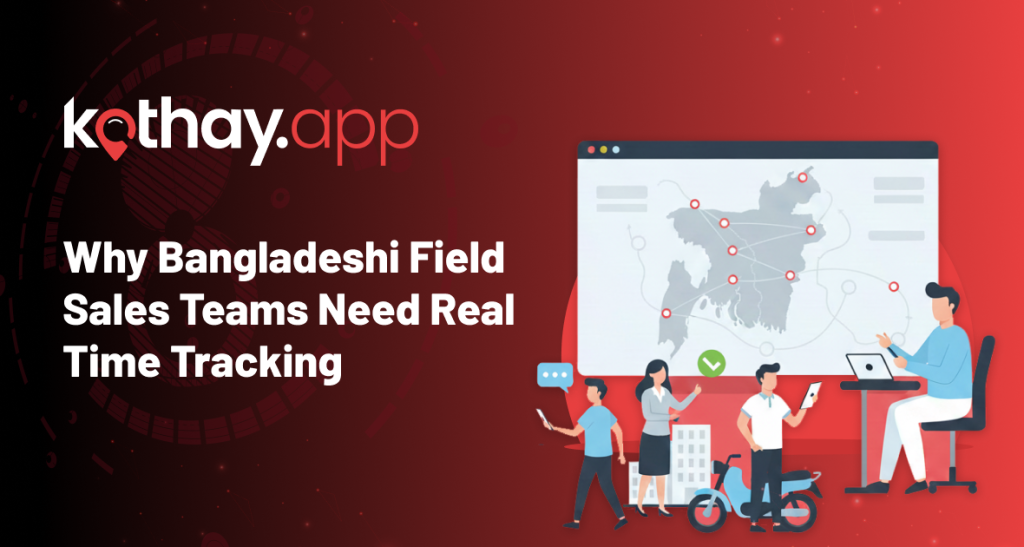
Field sales teams are the frontline force for many businesses in Bangladesh, especially in high-volume sectors like FMCG, pharmaceuticals, telecom, and distribution. These dedicated representatives travel daily across urban streets, rural haats, and district highways to visit retailers, distributors, doctors, pharmacies, and end customers, driving the majority of secondary sales in a market where traditional trade still accounts for over 95% of retail.
However, managing these mobile teams without proper visibility is a constant struggle. Most companies still depend on manual end-of-day reports, phone calls, or basic spreadsheets. In a country where Dhaka traffic can turn a 10 km journey into two hours and rural connectivity remains patchy, this outdated approach leads to ghost visits, wasted time, inaccurate data, and missed sales opportunities.
Real-time tracking technology changes everything. Using GPS, mobile apps, geofencing, and live dashboards, businesses can see exactly where their sales representatives are, what they are doing, and how effectively they are covering territories, all in real time.
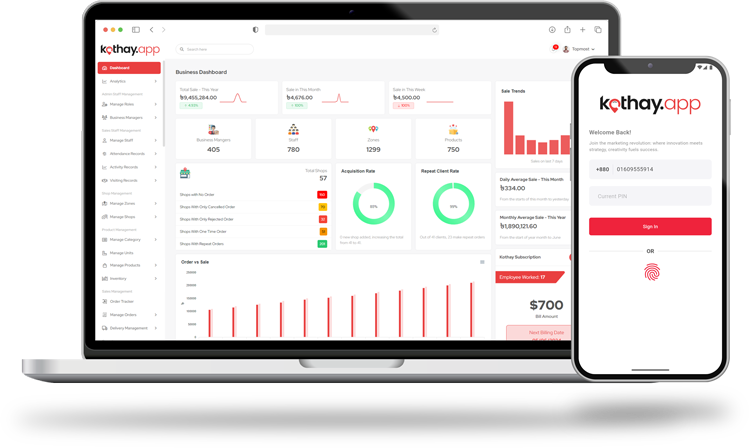
Platforms like Kothay.app, a Bangladesh-built field sales tracking solution, make this practical and affordable. With GPS-verified check-ins, beat planning, offline order capture, zone management, and performance dashboards, Kothay.app gives managers complete oversight while empowering reps to focus on selling rather than reporting. The result: higher productivity, better accountability, and faster growth in one of Asia’s most dynamic markets.
Field sales representatives are the eyes, ears, and engine of growth for Bangladeshi businesses. They operate outside traditional offices, covering thousands of retail outlets, pharmacies, and distributors across 64 districts from bustling Dhaka markets to remote villages.
Key Responsibilities of Field Sales Teams include:
In Bangladesh, where modern retail is still limited, and rural markets hold massive untapped potential, field sales teams are indispensable. The FMCG sector alone is valued at approximately USD 4 billion (2025–2026 estimates) and relies heavily on these reps to push products into the last mile. Pharmaceutical companies depend on medical representatives (MRs) to reach doctors and pharmacies, while telecom operators use field agents to activate SIMs, push data packages, and expand coverage in underserved areas.
Without efficient management, however, these teams become difficult to scale, especially with rising fuel costs, traffic congestion, and the need to cover more territory as businesses grow.
Managing dozens or hundreds of field sales representatives scattered across the country creates serious operational blind spots when relying on traditional methods.
Major Challenges include:
In a market where every additional outlet visit can drive meaningful revenue, these challenges directly limit growth. During peak seasons like Eid or Ramadan, the problems multiply, and manual systems simply cannot keep up.
Real-time tracking is the use of GPS technology, mobile applications, and cloud-based dashboards to monitor the exact location and activities of field sales representatives while they work. It provides live visibility into movements, visits, and performance without constant phone calls or manual updates.
Unlike basic attendance apps, modern real-time tracking systems are designed specifically for sales: they verify actual shop visits via geo-fencing, log orders instantly, and feed data into analytics dashboards.
Key Components of Real-Time Tracking Systems include:
This technology gives businesses unprecedented transparency and control turning field sales from a black box into a data-driven engine.
Today’s systems are mobile-first, affordable, and built for Bangladesh’s realities. Here are the features that matter most:
GPS Location Tracking
Live location on a map with geo-fencing to ensure reps stay within assigned zones.
Benefits: Improved accountability, greater transparency, and enhanced employee safety (managers can respond quickly if someone is in an unfamiliar or risky area).
Visit and Activity Tracking
Reps log visits instantly via app with time, duration, photos, order value, and notes. Geo-verified check-ins prevent fake reporting.
Examples: Retailer visit confirmation, order collection updates, client interaction records, and competitor shelf photos.
Route Optimization
Built-in beat planning and Google Maps integration suggest the most efficient daily routes.
Advantages: Reduced travel time, more client visits per day (often 10–20% increase), and lower transportation costs.
Real-Time Reporting and Analytics
Live dashboards show daily visits, order conversion, territory coverage, and individual performance. Alerts notify managers of missed targets or deviations.
Examples: Number of daily visits, sales performance by territory, activity reports for individual representatives, and comparison against targets.
Platforms like Kothay.app combine all these with Bangladesh-specific advantages: full offline mode, Bengali interface, order editing until delivery, and seamless integration for FMCG and distribution teams.
The advantages go far beyond simple location monitoring:
Improved Sales Productivity
Reps spend less time on paperwork and more on selling. Real-time route guidance and automated reporting free up 2–3 hours daily for actual client work.
Better Management Control
Managers see live activity and can coach underperformers instantly or reassign territories on the fly.
Increased Accountability
Geo-verified visits and activity logs ensure reps follow schedules and visit assigned clients. “Ghost visits” disappear almost overnight.
Faster Decision-Making
Real-time data reveals which products are moving, which territories need support, and where competitors are gaining ground, enabling same-day strategy adjustments.
Better Territory Coverage
Businesses can ensure every region and key retailer receives consistent visits, expanding market reach without adding headcount.
Local implementations show clear results: field teams achieve 10–20% more daily visits, productivity gains of 7–37%, and significantly higher order conversion rates.
FMCG Companies
Sales representatives visit hundreds of retail outlets daily to push snacks, personal care, and household items. Real-time tracking ensures proper beat coverage, promotion execution, and stock checks critical in a USD 4 billion market with intense competition.
Pharmaceutical Industry
Medical representatives call on doctors, hospitals, and pharmacies to promote medicines. Tracking verifies visits, logs sample distribution, and ensures compliance in a highly regulated sector facing post-2026 LDC graduation challenges.
Telecom Industry
Field agents promote SIM cards, recharge packs, and internet services across urban and rural areas. Real-time systems help monitor activation targets and prevent stock leakage in a market growing at 3.76% CAGR.
Distribution Businesses
Teams collect orders from retailers and maintain distributor relationships. Live tracking ensures timely order capture and territory management, reducing stockouts and improving sell-through rates.
In every case, companies using real-time tracking report faster sales cycles, better retailer relationships, and scalable expansion.
While powerful, adoption comes with some hurdles:
Employee Privacy Concerns
Some reps initially feel monitored or that “Big Brother” is watching. Clear communication that tracking is for productivity and safety (not punishment) is essential.
Training Requirements
Field teams, many of whom are less tech-savvy, need simple, hands-on training.
Technology Adoption
Shifting from paper to apps requires workflow changes and consistent usage.
Internet Connectivity Issues
Rural areas and occasional network outages can disrupt real-time updates (solved by strong offline modes).
Modern tools like Kothay.app minimize these issues with intuitive design, offline functionality, and local support.
Successful rollout follows these proven steps:
Start with a pilot in one territory, celebrate early wins, and scale. Most companies achieve full adoption and ROI within 3–6 months.
The technology is evolving quickly:
Emerging Trends include:
As 5G expands and AI matures in Bangladesh, even small distributors will access enterprise-level intelligence, making field sales more strategic and efficient than ever.
Kothay.app stands out as a locally developed, purpose-built solution for Bangladeshi field sales teams. It combines powerful real-time tracking with practical sales tools that address local challenges head-on.
Key Features include:
These features help businesses increase productivity, improve coordination, and gain better visibility into field operations. A Sylhet-based FMCG distributor using Kothay.app reported a significant productivity boost, with reps covering more outlets daily and managers gaining 58% better visibility into activities. Pharmaceutical and distribution clients praise the app for revolutionizing tracking, enabling real-time order insights, and supporting growth without extra headcount.
Affordable SaaS pricing, full offline support, and dedicated local support make Kothay.app ideal for SMEs and large enterprises alike, turning field sales from a management headache into a competitive advantage.
Field sales teams drive revenue across Bangladesh, but managing them manually leads to inefficiencies, missed opportunities, and low productivity. Real-time tracking with platforms like Kothay.app allows businesses to monitor activities, optimize routes, improve accountability, and make data-driven decisions.
The result: higher coverage, faster reporting, and stronger sales performance. Whether you manage 10 or 100 reps, Kothay.app empowers your team to sell smarter and grow faster.
Register today or try the free plan to transform your field operations instantly.
Field sales teams play a critical role in Bangladesh’...
Internet Service Providers in Bangladesh manage a rapid...
Sign up now to simplify your sales operations, improve productivity, and make data-driven decisions. Choose your plan, add your team, and unlock the full potential of your sales strategy. Don’t wait – elevate your sales management game and drive success with us!
Get Started