ডিস্ট্রিবিউশন ব�
ডিস্ট্রিবিউশন ব্যবস...
Online shopping in Bangladesh is booming, with the e-commerce market reaching around US$6–7.4 billion in 2025 and expected to hit US$13 billion by 2027. Customers now expect fast deliveries and real-time updates for orders, from urban hubs like Dhaka to rural areas.
Many small and medium businesses still rely on manual tracking calls, handwritten logs, or WhatsApp, which leads to delays, lost packages, and frustrated customers.
Track your order online systems solve this by offering real-time visibility for both businesses and customers, ensuring timely and reliable delivery. Tools like Kothay.app help Bangladeshi companies track deliveries, manage field teams, optimize routes, and streamline fulfillment, bridging the gap between order placement and successful delivery.
This guide covers what order tracking is, its importance in Bangladesh, challenges with traditional methods, benefits of modern systems, real-life examples, implementation tips, and future trends.
Online order tracking is a digital system that allows both businesses and customers to monitor the status and location of an order in real time. It provides end-to-end visibility from the moment an order is placed until the parcel reaches the customer’s doorstep (or is successfully returned).
Unlike traditional methods, where you only hear “it’s on the way” via a phone call, modern tracking systems update automatically and give precise information at every step.
Key Elements of Online Order Tracking include:
These features improve transparency, reduce uncertainty in the delivery process, and build trust. In Bangladesh, where cash-on-delivery (COD) still dominates, and customers are cautious about online payments, reliable tracking has become a key differentiator for successful e-commerce and distribution businesses.
The eCommerce and logistics sectors in Bangladesh have expanded significantly over the last decade. Internet penetration reached around 47–53% by late 2025 (with 82.8 million users), mobile connections exceeded the population at 105%, and major platforms like Daraz, Chaldal, and Pathao have made online shopping mainstream even in smaller towns and rural areas.
Key Drivers of Growth include:
With this growth, efficient order tracking has become essential for both businesses and customers. Customers in Sylhet or Barishal no longer tolerate vague updates like “tomorrow inshaAllah.” They expect the same professionalism seen on international platforms. For businesses, tracking is no longer optional; it directly impacts customer retention, repeat purchases, and operational costs in a market where failed deliveries and returns can eat 5–10% of margins.
Many businesses still use outdated tracking methods: manual logs, phone calls to delivery boys, or simple Excel sheets. These create serious problems in Bangladesh’s unique operating environment.
Common Challenges include:
During peak seasons like Eid or Pohela Boishakh, these issues multiply. Congestion on highways, sudden hartals, or floods can delay deliveries by days, and without tracking, businesses lose control and customers lose trust. The result? Higher return rates, increased customer support calls, and damaged brand reputation.
Online tracking systems use a combination of digital technologies to monitor delivery operations seamlessly across Bangladesh’s challenging terrain.
Key Technologies Used include:
Typical Tracking Process:
Platforms like Pathao Courier, Steadfast, REDX, and eCourier already offer excellent public tracking, while business-focused tools add internal oversight for companies managing their own fleets or distributor networks.
Online order tracking delivers clear advantages for everyone involved.
Increased Transparency
Customers can monitor their order status anytime, anywhere, no more anxious phone calls to customer service.
Improved Customer Satisfaction
Regular updates build trust and reduce anxiety about delivery delays. In Bangladesh, where COD is common, seeing “Out for Delivery” with an accurate ETA dramatically increases successful delivery rates.
Better Delivery Efficiency
Businesses can monitor delivery teams and optimize routes dynamically to avoid traffic or flooded areas.
Faster Issue Resolution
Companies can quickly identify delays, reassign agents, or contact customers proactively if a delivery attempt fails.
Reduced Customer Support Workload
Customers self-serve via tracking links, freeing up teams to handle complex issues instead of basic “where is my order?” queries.
Overall, businesses using advanced tracking often see 20–30% fewer failed deliveries and significantly higher customer loyalty scores.
Benefits for Businesses in Bangladesh
Online tracking systems provide several strategic advantages tailored to Bangladeshi operations.
Improved logistics management
Companies monitor deliveries in real time, even across 64 districts, and adjust for local disruptions like traffic on the Dhaka-Chittagong highway or rural road conditions.
Enhanced operational control
Managers track field agents and delivery performance via dashboards, seeing who is on route, who is idle, and where bottlenecks occur.
Better resource allocation
Businesses optimize routes, reduce fuel costs, and deploy agents more effectively. Some logistics players have reported 15–25% savings in operational expenses through better planning.
Stronger brand reputation
Reliable delivery services improve customer trust and loyalty. In a competitive market, “trackable and on-time delivery” becomes a powerful marketing point, especially for new e-commerce brands or wholesalers expanding online.
eCommerce Platforms
Daraz, Pickaboo, and other marketplaces rely heavily on order tracking to manage thousands of daily deliveries. Customers track via app or website, while internal teams use advanced systems for route optimization and performance monitoring.
Retail Businesses
Brick-and-mortar retailers or hybrid stores use tracking to monitor deliveries from central warehouses to multiple outlets or directly to customers. A Dhaka supermarket chain, for example, can ensure fresh produce reaches suburban stores on time.
Wholesale Distribution
Wholesalers track large shipments to retailers across the country, ensuring kirana shops and rural distributors receive goods predictably. This is critical for FMCG and pharmaceutical wholesalers handling time-sensitive products.
Food Delivery Services
Pathao Food, Foodpanda, and restaurant apps use real-time tracking so customers can watch their meal approach in real time, reducing complaints and improving tipping rates.
In all cases, businesses combining public customer tracking with internal field management tools achieve faster cycles and higher success rates.
Despite the benefits, some businesses face hurdles when adopting tracking technologies.
Technology adoption
Small businesses may lack technical expertise or fear complex systems.
Infrastructure limitations
Internet connectivity can be inconsistent in rural areas or during power outages, though offline-capable apps mitigate this.
System integration
Tracking systems need to integrate smoothly with existing order management, inventory, and accounting tools to avoid data silos.
Many smaller wholesalers and retailers hesitate due to perceived costs, but affordable SaaS solutions have made entry easier than ever.
Businesses can improve delivery tracking by following several best practices that work well in Bangladesh’s context.
Best Practices include:
Start a small pilot in one city or with one courier partner, then scale. Many businesses see full ROI within 3–6 months through reduced support calls and higher delivery success rates.
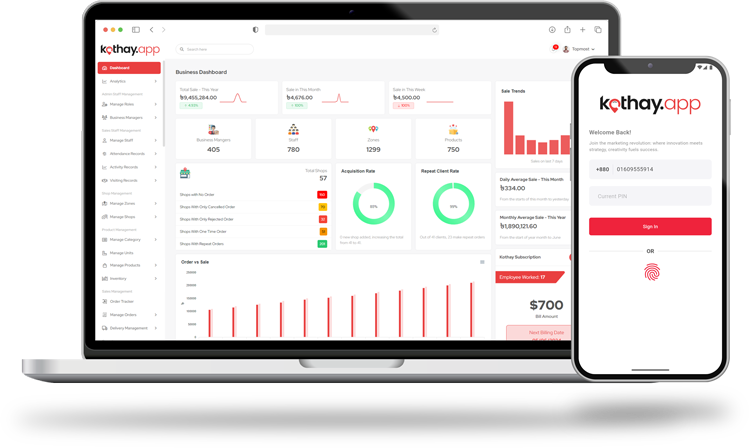
Modern platforms like Kothay.app give businesses much more control and visibility over their delivery and field operations. Instead of relying on phone calls or manual updates, companies can use Kothay’s real‑time GPS tracking, order management, and zone planning to monitor where staff are, what tasks they’re completing, and how deliveries are progressing, all from one dashboard.
This helps improve accountability, streamline workflows, and ensure orders and field visits happen on time, even for in‑house delivery teams and distributor networks in Bangladesh’s fast‑growing market.
Key Capabilities include:
These tools help businesses improve delivery efficiency and ensure timely order fulfillment even when managing internal fleets or B2B wholesale deliveries. Kothay.app’s offline mode and Bangladesh-specific design make it particularly effective for covering both urban traffic and rural challenges.
The future of delivery tracking in Bangladesh will be driven by new technologies that make operations faster, smarter, and more reliable.
Emerging Trends include:
As 5G expands and AI adoption grows, even small businesses will be able to offer tracking experiences rivaling global standards, reducing average delivery times further and opening rural markets more effectively.
In Bangladesh’s rapidly growing e-commerce and delivery market, online order tracking is no longer optional; it’s essential. Real-time tracking brings transparency, boosts delivery efficiency, and keeps customers happy, helping businesses stand out in a competitive landscape.
By adopting platforms like Kothay.app, companies can monitor field teams, manage logistics, and ensure on-time deliveries, all from a single dashboard. Reduce delays, cut costs, and build trust with every order.
Start improving your delivery operations today register nowor try Kothay.app’s free plan to experience smarter, faster, and more reliable order management.


Efficient delivery operations are the backbone of any m...

Retailers and wholesalers today operate in a fast-movin...
Sign up now to simplify your sales operations, improve productivity, and make data-driven decisions. Choose your plan, add your team, and unlock the full potential of your sales strategy. Don’t wait – elevate your sales management game and drive success with us!
Get Started