বাংলাদেশের ব্যব�
বাংলাদেশের অর্থনীতি...

Best Sales performance tracking techniques or plans are quite different from your traditional sales strategies. Here, you need to measure the performance of your team, your action, and the validity of your forecast.
The best practices of sales KPI tracking include highlighting both the good parts and bad parts of the pipeline and helping the authority to take required measures rather than changing the whole sales journey.
Sales performance tracking isn’t just about logging deals or checking numbers; it’s about gaining real-time visibility into your pipeline, understanding buyer behavior, and enabling your team to focus on the most effective actions. Coupled with the right KPIs, sales tracking gives you the power to forecast growth, course-correct early, and close more deals.
Let’s dig into more about sales tracking and the right practices.

Sales tracking is an ongoing process of monitoring sales activities, customer behaviors and interactions, deal stages, and performance metrics across the sales team. It helps to keep your sales pipelines more effective and draw significant conversion rates.
Tracking sales allows managers to:
Key performance indicators (KPIs) help turn raw sales data into actionable insights. When you track the right KPIs, you’re no longer relying on guesswork. Instead, you’re making strategic decisions based on what the numbers tell you.
In 2026, with sales cycles becoming more complex and customer journeys more digital, tracking KPIs is critical for:

Below are essential KPIs every sales team from Bangladesh should track consistently.
To keep up with BD’s competitive markets and digital shifts, consider tracking these supplementary KPIs:

To get the most value from your KPIs, these best practices should be part of your tracking strategy:
A modern CRM system should:
Sales tracking has gone far beyond Excel spreadsheets and manual logs. In 2026, here’s how tech is transforming the game:
Every business in Bangladesh is different, so your KPIs should reflect your model, goals, and team size. Here’s how to choose wisely:
Sales tracking isn’t just a sales function—marketing plays a major role too.
When marketing and sales teams align on KPIs like lead quality, lead source ROI, and buyer personas:
Consider setting up shared dashboards and having monthly review meetings to stay aligned.

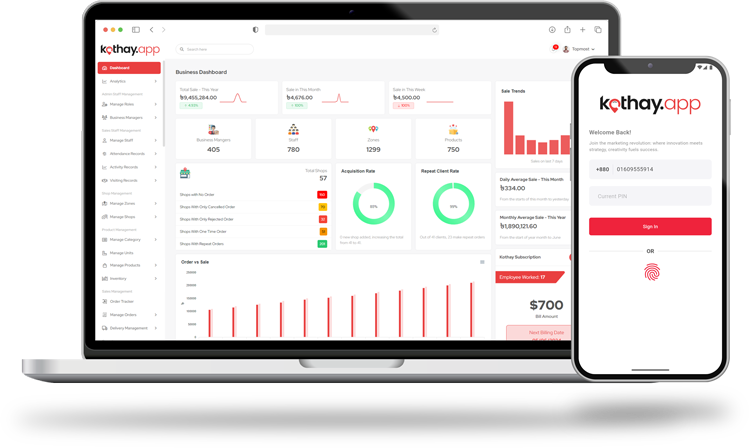
Looking for a lightweight, intuitive platform to track sales, manage deals, and monitor KPIs without bloated CRM features?
Try Kothay.app a simple, powerful tool for modern sales teams.
With Kothay, you can:
Start tracking smarter, not harder. Try Kothay.app today.
Sales cycle length, lead conversion rate, and average deal size are typically the most insightful KPIs for most sales teams.
By monitoring trends across your pipeline (e.g., deal stage velocity, close rates), you can more accurately project future revenue.
Yes, especially if your team handles a high volume of leads or deals. CRMs reduce manual work and ensure consistent, reliable reporting.
All KPIs are metrics, but not all metrics are KPIs. KPIs are metrics directly tied to goals and business outcomes.
Sales tracking isn’t about collecting data. It’s about using data to drive growth. In 2026, the businesses that win are those that track the right KPIs, implement best practices, and empower their teams with smart tools.
By aligning metrics with goals and adopting intuitive platforms like Kothay.app, you’ll create a high-performance sales engine that drives predictable, scalable growth.

A complete sales management software will scale up your...
Sign up now to simplify your sales operations, improve productivity, and make data-driven decisions. Choose your plan, add your team, and unlock the full potential of your sales strategy. Don’t wait – elevate your sales management game and drive success with us!
Get Started