Pourquoi la gestion de bankroll chez Win Uniq
La gestion de bankroll : clé de votre expérience sur ...

Managing time well is key for sales reps. You juggle client calls, meetings, and follow-ups daily. Using the best practices for time tracking helps you stay organized and productive. In Bangladesh, where sales teams often handle multiple clients, tracking time ensures you meet deadlines and maximize efficiency.
I’ll share proven strategies to track your work hours effectively. You’ll find tips to streamline project time tracking, improve transparency with clients, and avoid burnout. These methods suit sales reps and employees in fast-paced environments. Tools like kothay.app can simplify the process, making your workday smoother.
This article covers practical time-tracking tips for employees, with a focus on sales reps. It includes steps to start tracking, choosing the right time logger for work, and avoiding common pitfalls. Expect real-world examples from Bangladesh to make these practices relatable and actionable for you.

You’re a sales rep in Dhaka, chasing leads and closing deals. Time tracking shows how you spend your day. It helps you prioritize high-value tasks, like client pitches, over less critical ones. Accurate tracking builds trust with managers and clients by proving your effort.
Recording your hours reveals patterns. You might notice you spend too long on emails. A sales rep in Chittagong found that logging calls helped her cut unnecessary meetings. This freed up time for client follow-ups, increasing her sales by 15%. Productivity rises when you focus on what matters.
Clients want to know what you’re doing. Time tracking provides clear reports. If you’re working with a supplier in Sylhet, sharing logged hours builds trust. It shows exactly how much time you spent on their project. Transparency strengthens relationships and justifies your billing.
Tracking time helps you avoid overworking. Sales reps often push too hard, especially during peak seasons. By monitoring hours, you spot when you’re stretched thin. A Dhaka-based rep used kothay.app to cap daily hours, ensuring rest and sustained performance.

Starting to track time feels overwhelming, but it’s simple with the right approach. Begin with a clear system. Choose a tool that fits your workflow, like a time tracker for work. Sales reps need flexibility, so pick something easy to use on the go.
A good time logger for work saves effort. Tools like kothay.app let you log hours from your phone. They’re ideal for sales reps traveling across Bangladesh. Look for features like automatic timers and project-based reporting to simplify your process.
Know why you’re tracking time. Are you measuring project hours or personal productivity? A sales rep in Rajshahi set goals to track client calls separately from admin tasks. This clarity helped him allocate time better and hit sales targets faster.
Don’t wait until the end of the day. Log tasks as you do them. A rep in Khulna forgot to track a client meeting and underestimated hours. Real-time logging prevents errors. Use a mobile app to record tasks instantly, ensuring accuracy.
Check your time logs every week. This helps you spot trends. Are you spending too much time on low-priority tasks? A Dhaka rep reviewed her logs and cut time on redundant emails. Weekly reviews keep you aligned with your goals.

Employees, especially sales reps, need practical methods to track time. These best practices for time tracking ensure you stay efficient without feeling micromanaged. They focus on simplicity, accuracy, and flexibility to fit your busy schedule in Bangladesh’s fast-paced sales environment.
Complex systems waste time. Use straightforward tools with minimal steps. A sales team in Dhaka switched to a simple time sheet on kothay.app. It reduced logging time by 20%. Simple systems encourage consistent use and prevent frustration.
Log every task, even small ones. A 5-minute client call matters. Inconsistent logging skews data. A rep in Barisal missed logging short calls, underreporting his work by 10 hours monthly. Consistency ensures your time sheet reflects your true effort.
Tags categorize your tasks. For example, tag time as “client meeting” or “proposal prep.” A Chittagong rep used tags to separate prospecting from follow-ups. This showed she spent 30% of her day on low-value tasks, prompting a workflow change.
You don’t need minute-by-minute logs. Track in 5- or 15-minute intervals. A Sylhet rep found tracking every second stressful. Switching to 15-minute blocks reduced her logging time while keeping reports accurate. Balance precision with practicality.
Share your time-tracking process with colleagues. A sales team in Rangpur aligned on logging practices, improving project estimates. Clear communication prevents confusion. It ensures everyone uses the same categories, making team reports cohesive.

Sales reps often work on multiple projects. Tracking project time accurately helps you meet deadlines and bill clients correctly. These practices ensure your project time tracking stays organized and effective, even in Bangladesh’s dynamic sales landscape.
Divide projects into smaller tasks. A Dhaka rep split a client campaign into research, pitching, and follow-ups. This made tracking easier and showed where time went. Smaller tasks improve accuracy and help you estimate future projects better.
Link hours to specific clients or projects. A Khulna rep tracked time for each client separately, revealing one took 40% of his week. This led to renegotiating terms. Client-specific tracking clarifies resource allocation and supports fair billing.
Manual reports take time. Automated tools generate reports instantly. A Rajshahi sales team used automated reports to show clients their project progress. This saved hours weekly and impressed clients with professional updates. Automation boosts efficiency.
Use past time logs to refine estimates. A Barisal rep underestimated a proposal task, missing a deadline. After reviewing logs, she adjusted future estimates, improving delivery by 25%. Data-driven estimates prevent overpromising and underdelivering.
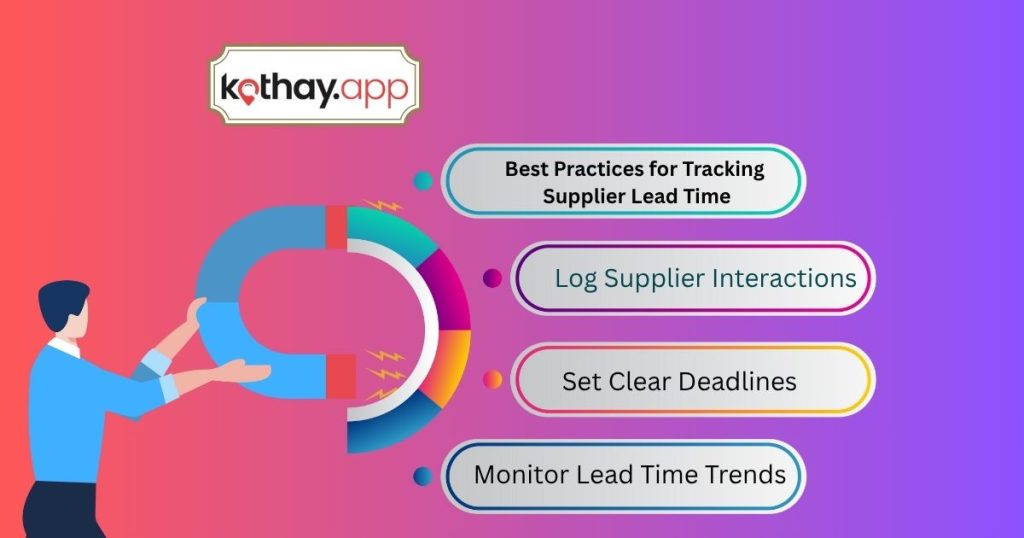
Sales reps in Bangladesh often coordinate with suppliers. Tracking supplier lead time ensures smooth project delivery. These practices help you monitor supplier timelines effectively, keeping your sales process on track without delays.
Record every supplier call or email. A Chittagong rep tracked supplier discussions, noting delays in delivery. This helped her predict lead times better. Logging interactions creates a timeline, making it easier to follow up and avoid bottlenecks.
Define deadlines for suppliers. A Sylhet rep set firm delivery dates, reducing late shipments by 30%. Clear deadlines align expectations. Share your time-tracking data with suppliers to show how their delays impact your projects, encouraging accountability.
Track supplier lead times over months. A Dhaka rep noticed one supplier consistently delayed by a week. She switched to a faster supplier, saving time. Monitoring trends helps you choose reliable partners and plan projects accurately.

Sales reps rely on IT tools for client management. Tracking IT-related tasks ensures you use these tools efficiently. These practices help you integrate IT time tracking into your workflow, boosting productivity in Bangladesh’s tech-driven sales environment.
Log time spent on CRM or email platforms. A Rangpur rep found she spent 2 hours daily on CRM updates. Streamlining this cut her time by half. Tracking IT usage highlights inefficiencies, letting you optimize your tech workflow.
Don’t mix IT tasks with client work. A Khulna rep logged CRM updates separately from client calls. This showed IT tasks took 25% of her day, prompting automation. Separating tasks clarifies where your time goes, improving focus.
Choose tools with integrations. A Dhaka sales team integrated their CRM with a time tracker, reducing manual logging by 15%. Integrations sync data across platforms, saving time. Look for tools that connect with your existing systems for seamless tracking.
Learn your tools well. A Barisal rep took a CRM training session, cutting her data entry time by 10 hours monthly. Proper training reduces errors and speeds up IT tasks, leaving more time for sales.

Even with the best intentions, time tracking can go wrong. Sales reps in Bangladesh face unique challenges, like balancing client demands with admin tasks. Avoiding these mistakes keeps your tracking accurate and stress-free.
Complex systems discourage use. A Rajshahi rep used a tool with too many features, wasting time learning it. She switched to a simpler time sheet, improving compliance. Stick to tools that are easy to use and fit your needs.
Estimating hours after the fact leads to errors. A Chittagong rep guessed her weekly hours, underreporting by 5 hours. Real-time tracking with a mobile app fixed this. Log tasks as they happen to ensure accuracy.
Small tasks add up. A Dhaka rep ignored 5-minute emails, missing 3 hours weekly. Logging all tasks, even brief ones, gives a full picture of your day. Track everything to understand your workload better.
Failing to review logs hides inefficiencies. A Sylhet rep skipped weekly reviews and missed that she spent too long on low-priority clients. Regular reviews catch issues early, letting you adjust your schedule for better results.

Time tracking isn’t just about logging hours. It’s a tool for growth. Sales reps can use data to improve skills, impress managers, and increase sales. Here’s how to leverage tracking for your career in Bangladesh’s competitive market.
Your time logs show where you spend effort. A Barisal rep noticed she spent hours on manual data entry. She learned automation tools, saving time and boosting her value. Use logs to spot areas for skill development.
Accurate time sheets prove your hard work. A Dhaka rep shared detailed logs with her manager, earning a promotion for her efficiency. Clear records highlight your contributions, making you stand out in performance reviews.
Use time data to set targets. A Khulna rep aimed to reduce admin time by 10%. She hit this goal in two months, increasing client-facing time. Personal goals based on logs drive continuous improvement.
Tracking helps you set boundaries. A Rangpur rep capped her work at 8 hours daily, improving her well-being. Balanced schedules prevent burnout, keeping you productive long-term. Use logs to protect your personal time.
Use a mobile-friendly time tracker like kothay.app. Log tasks in real-time, categorize by project, and review weekly for accuracy. This keeps your tracking simple and effective.
Log tasks as you do them. Real-time tracking prevents errors. A Dhaka rep logs calls right after they end, ensuring her time sheet stays accurate.
Yes, it ensures accurate billing. Log hours per client project. A Chittagong rep used detailed logs to justify invoices, building trust with clients.
Yes, small tasks add up. Logging 5-minute emails helps you see your full workload. A Sylhet rep tracks all tasks for better time management.
Choose a flexible tool and focus on insights, not scrutiny. A Barisal rep uses tracking to optimize her day, not to feel watched.
Time tracking transforms how you work as a sales rep. By following these best practices, you boost productivity, impress clients, and grow your career. Start tracking with a simple tool like kothay.app. Log tasks in real-time, review weekly, and use data to refine your workflow.
In Bangladesh’s fast-paced sales world, mastering time tracking sets you apart. Download Kothay now and take charge of your day!
La gestion de bankroll : clé de votre expérience sur ...

Can Your Employer Track Your Location Employee locat...
Sign up now to simplify your sales operations, improve productivity, and make data-driven decisions. Choose your plan, add your team, and unlock the full potential of your sales strategy. Don’t wait – elevate your sales management game and drive success with us!
Get Started